How to Choose Boride Dressing Stones
Boride Dressing Stones are available in several variants. The guidelines below are intended to help you choose the right dressing stone for cleaning, refreshing, flattening, and resurfacing sharpening stones in 6" x 1" Edge Pro form factor.
| Product Family | Available Grits | Boride Bond | Best For |
|---|---|---|---|
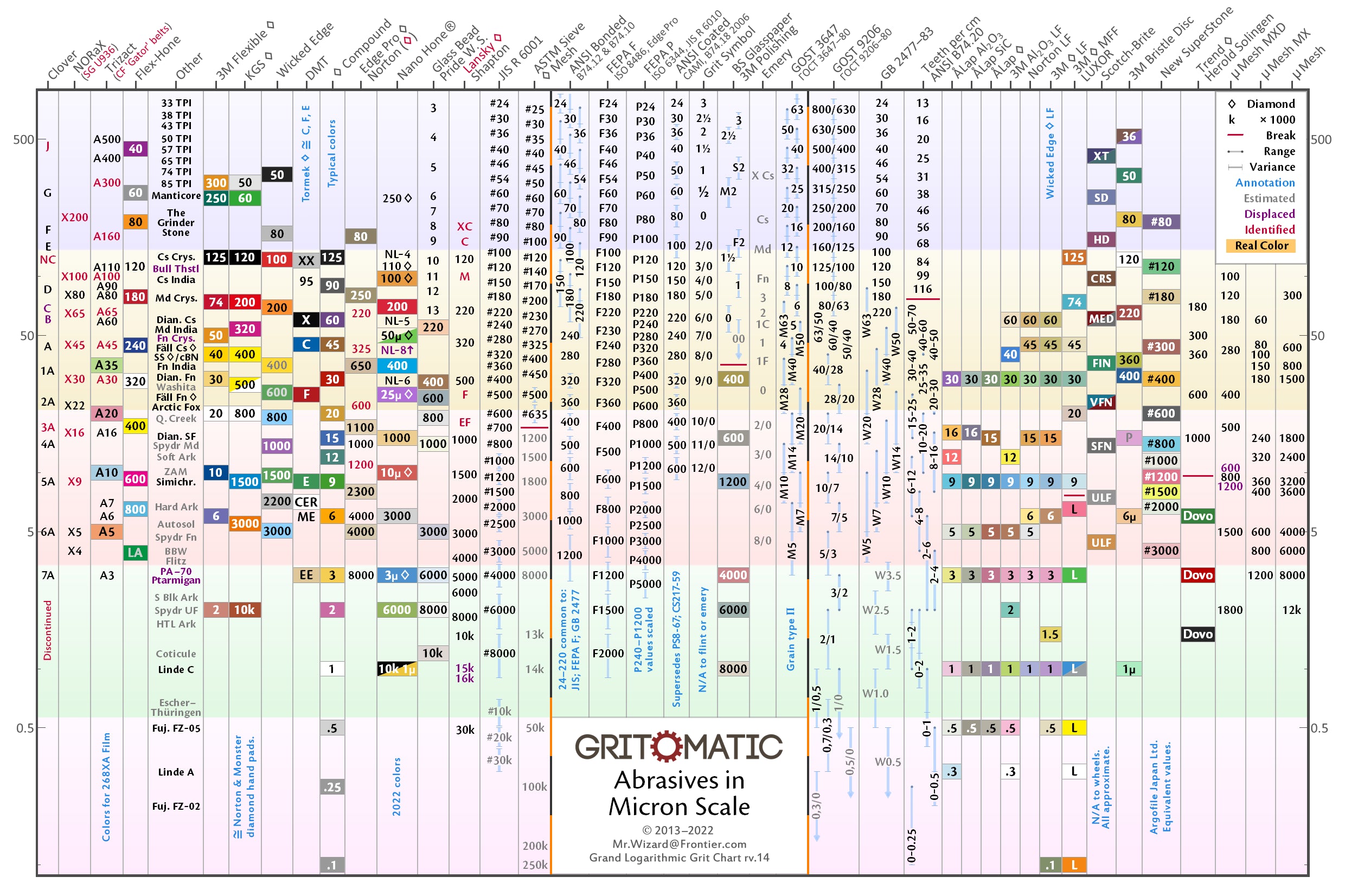
| Aluminum Oxide Dressing Stone | F150, F220, F320 | F9 / G9 | Default choice, routine maintenance, controlled resurfacing, smoother finish |
| Silicon Carbide Soft Dressing Stone | F120 | D10 | Aggressive cleaning, slurry-rich resurfacing, loaded or glazed stones |
| Silicon Carbide Hard Dressing Stone | F150 | K10 | Harder targets, controlled abrasive release, restoring other dressing stones |
Aluminum Oxide Dressing Stone is the recommended starting point for most applications. It provides controlled resurfacing and routine maintenance with lower risk of excessively roughening the stone surface.
F150 is the recommended default grit. If the dressing stone leaves excessive scratches or too aggressive surface texture, switch to a finer grit.
If Aluminum Oxide Dressing Stone does not effectively reopen or clean the target stone, switch to Silicon Carbide Soft Dressing Stone for more aggressive and slurry-rich resurfacing.
If Silicon Carbide Soft Dressing Stone wears too quickly without effectively resurfacing the target stone, use Silicon Carbide Hard Dressing Stone.
Silicon Carbide Hard Dressing Stone is also recommended for restoring flatness and working surface of other dressing stones.
How to Use Boride Dressing Stones
Boride Dressing Stones are not sharpening stones and should not be used for sharpening knives or tools.
Running water is the preferred operating condition. Dry usage should be avoided. Oil should not be used.
If the target sharpening stone requires soaking before knife sharpening, it should also be soaked for the same amount of time before dressing.
Excessive pressure should be avoided at all cost. Dressing Stones work through abrasive interaction and surface refreshing, not through force.
Boride Dressing Stones should not be used with ultra-fine natural stones, saturated oilstones, electroplated diamond or CBN plates, extra-coarse diamond or CBN stones, or sintered ceramic sharpening stones.
Standard Boride dressing sticks are supplied unmarked from factory. Gritomatic adds permanent laser engraving for convenient identification of abrasive type, bond, and grit.